
11th December, 2025
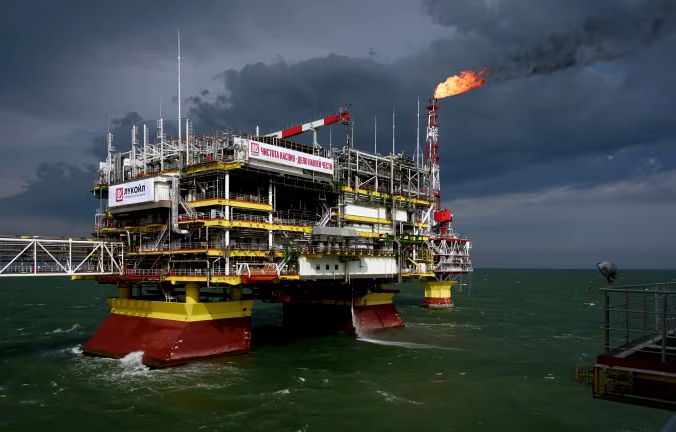
Ukraine said Thursday its long-range drones had struck a major offshore oil platform in the Caspian Sea this week, in a previously undisclosed mission that signals a new expansion of its target list in a mounting campaign to cut off the Russian energy revenues funding its war.
“This is Ukraine’s first strike on Russian infrastructure related to oil production in the Caspian Sea,” a source with the Security Service of Ukraine told CNN, calling it “another reminder to Russia that all its enterprises working for the war are legitimate targets.” The Filanovsky oil platform, owned by Lukoil, claims to be the largest oil field in the Russian sector of the Caspian.
Ukraine’s deep strike campaign against Russian energy facilities began in earnest in early 2024, but since the beginning of August, Kyiv has escalated this effort, doubling down on what Ukraine’s sanctions commissioner Vladyslav Vlasiuk calls “long-range sanctions” targeting Russia’s biggest financial lifeline. Ukraine is now hitting an increasingly broad range of targets including not just refineries but oil and gas export infrastructure, pipelines, tankers, and now offshore drilling infrastructure.
It comes at a critical juncture in the war. Recent US-led peace efforts only appear to have hardened Russia’s maximalist demands, and Moscow’s forces are creeping forward in several areas of the front line. That, along with a global oil supply glut cushioning the market against potential price rises, means Ukraine’s Western allies have grown increasingly supportive of this campaign.
Ukraine has hit Russian oil facilities over 200 times Drone and missile strikes on Russian oil infrastructure began slowly amid fears they could disrupt European oil supply and prices — with only 16 Ukrainian strikes on oil targets in the first two years of the war. But as markets settled, Ukraine’s campaign ramped up.
“I think the general strategy since summer is the idea that you cannot allow Russia to retain so much of its critical energy revenue that has been fuelling the massive manpower recruitment advantage that Moscow has over Ukraine,” said Helima Croft, global head of commodity strategy at RBC Capital Markets, referring to Russia’s ability to pay high salaries and sign-on bonuses to recruit soldiers.
“So, I do think it’s a more systematic effort to sort of close that energy ATM.”
Repeated attacks, bigger targets Between the beginning of August and the end of November, Ukraine struck at least 77 Russian energy facilities, almost twice the total for the first seven months of the year, according to the ACLED. In November at least 14 refinery hits and four attacks on Russian export terminals were recorded.
Striking the same facilities multiple times is now a key part of the strategy. The Rosneft-owned Saratov refinery, for example, has been hit at least eight times since the beginning of August, with four of those strikes in November.
“What used to be occasional strikes meant to cause damage has become a sustained effort to keep refineries from ever fully stabilising,” wrote Nikhil Dubey, senior refining analyst at data and analytics firm Kpler, in early December.
Ukrainian strikes on Russian oil infrastructure
The strikes have hit critical oil facilities such as refineries, depots, export terminals and pipelines. Ukraine’s drones and missiles have extended deep into Russia, the farthest of which reached an oil refinery in Omsk, Siberia, over 2,500 km (1,560 miles) away from the Ukraine-Russia border.
Research shows that repeated strikes on Russian refineries like Saratov have knocked a significant amount of capacity offline and are “slowing the pace of every repair.” He also assesses that since August, Kyiv has been trying to maximize the impact of its refinery strikes, by targeting not just “the visible parts of the refinery but the important clogs in the refining system that produce the final fuels.”