What did President Diomay promise to the Black Tiranga?
Amidst the tension gripping the African continent, a decision has emerged that puts the Senegalese national team back in contention for the most prestigious football titles.
The decision was taken months after the final whistle of the Africa Cup of Nations, a tournament marked by dramatic events and won by the Lions of Teranga against the host nation, Morocco.
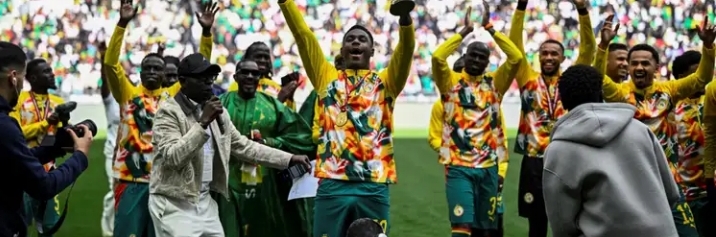
The President of the Republic of Senegal, Bassirou Diomaye Faye, has kept his promise, deciding to distribute substantial financial rewards to the “Lions” players.
This move comes amid a complex crisis that has shaken the foundations of African football, the spark of which was ignited during the tournament final held in Rabat between Senegal and Morocco.
The match saw dramatic events in the final minutes, including fierce protests, a temporary suspension of play, and controversial refereeing decisions that led to formal appeals from the Moroccan side.
As the days passed, the Confederation of African Football (CAF) issued disciplinary decisions that reopened the title dispute, sparking a wave of legal and media controversy between the two sides. The repercussions extended to the corridors of football associations and governments, and even reached the stage of appeals before international bodies.
The newspaper explained that financial bonuses totalling 75 million CFA francs (approximately 134,000 US dollars) had been transferred to each player in the Senegalese national team, in recognition of their achievements in the 2025 Africa Cup of Nations.
It noted that President Faye had fulfilled this promise, which he made during the official ceremony at the presidential palace, where the commitment also included granting each player a 1,500-square-metre plot of land in the coastal area of “Petit-Cote”.
She confirmed that the payments were made a few days before the Senegalese national team’s friendly match against Peru at the Stade de France, approximately two months after the conclusion of the African Cup of Nations.
It should be noted that the crisis was not confined to the sporting arena, but escalated into a wider continental dispute involving mutual accusations and political interference from certain African nations, reflecting the intensity of the rivalry and the sensitivities surrounding the ‘Africa Cup of Nations’ title, which often goes far beyond the result of a single match.