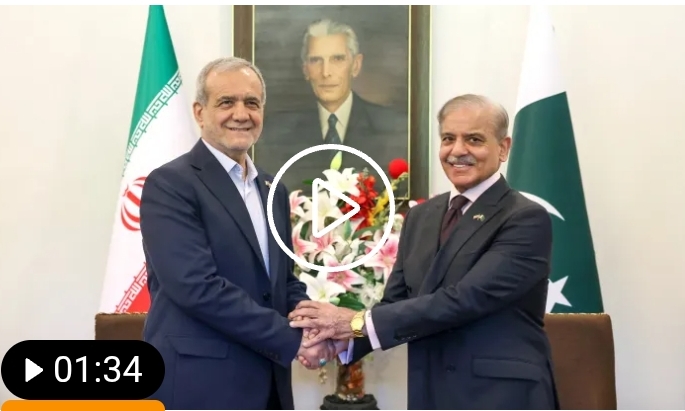
Iran’s President Masoud Pezeshkian says no negotiations will take place on the country’s ballistic missiles.
President Donald Trump says there will be no further US naval blockade of the Strait of Hormuz, insists Iran has agreed to allow nuclear inspections despite statements from Iranian officials that it has not done so.
Oman announces temporary maritime corridor for Hormuz traffic
Oman said it had coordinated with the International Maritime Organization (IMO) to provide a temporary maritime corridor for vessels seeking to transit the Strait of Hormuz, the country’s state news agency reports.
Vessels wanting to use the temporary corridor would need to coordinate with the IMO, based on coordinates announced by the organisation and Omani authorities, it added.
The measure is aimed at ensuring freedom of navigation through the strategic waterway in line with international law and the law of the sea, which uphold freedom of navigation without imposing transit fees.
Bank chief says Iran may use released funds to buy US goods, but no requirement
The governor of Tehran’s central bank says that Iran could use the frozen funds released to it under its deal with Washington to buy US farm products.
But Abdolnaser Hemmati, in a video message, denied US President Donald Trump’s declaration that the agreement obliges Iran to spend the money on American exports.
Hemmati said it was true that the initial $12bn released to Tehran was to be used to buy “essential goods and medicine”, adding that this would free Iran to spend its regular funds on whatever it wants.
Trump said today that Iran’s money would be “used for the purchase of food and medical supplies, exclusively from the United States, including Corn, Wheat, and Soybeans from our great American Farmers.”
But Hemmati reassured his fellow Iranians: “That is not true. There is no such requirement in the memoranda that were signed during the negotiations. There is no obligation to buy from the United States.
“However, we also see no problem with purchasing from the United States if the price and quality of essential goods … are competitive,” he said.