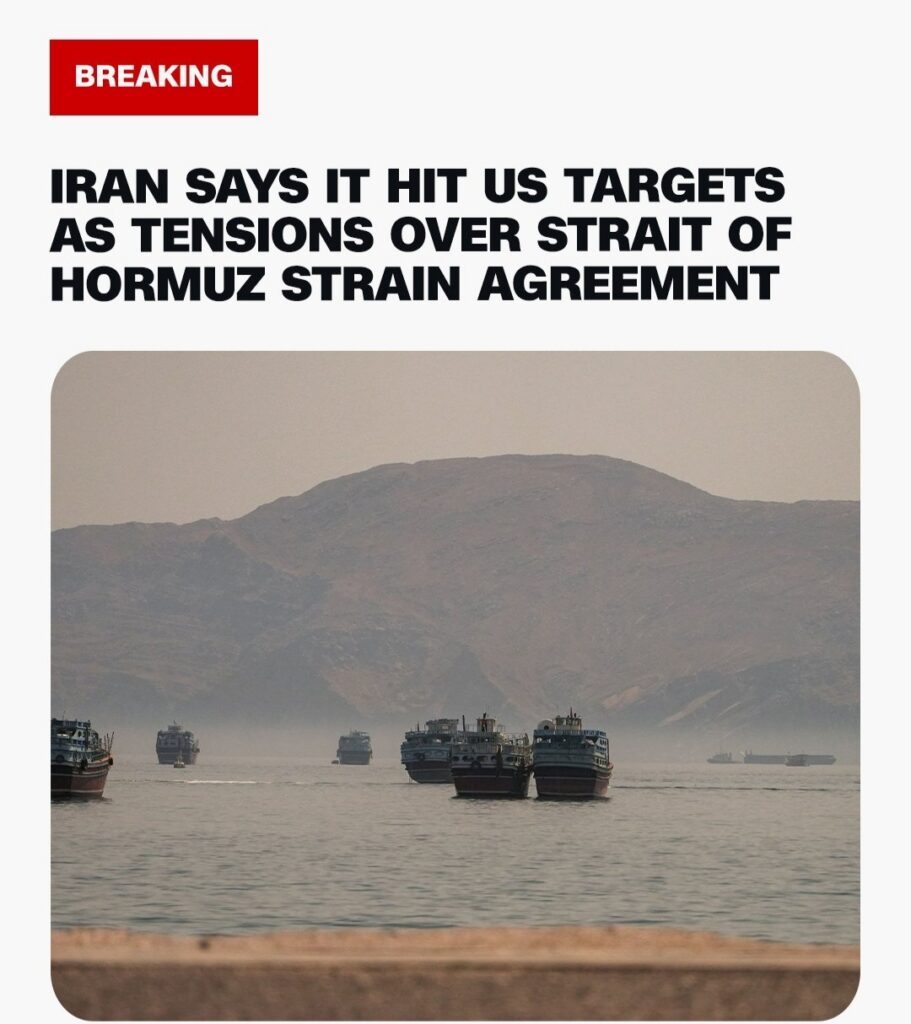
Iran Says It Struck US Military Targets as Strait of Hormuz Dispute Threatens Fragile Peace Agreement
Tensions between Iran and the United States have escalated once again after Tehran announced that it had launched strikes against what it described as US-linked military targets, raising fresh concerns over the future of the fragile peace agreement reached between the two countries earlier this month.
Iranian authorities said the attacks were carried out in response to recent US military operations, which they claimed violated the terms of the agreement intended to reduce hostilities between both nations. While Iranian officials described the strikes as defensive measures, they did not immediately provide detailed information about the exact locations or extent of the damage.The latest escalation comes amid growing tensions surrounding the Strait of Hormuz, one of the world’s most strategically important shipping routes through which a significant portion of global oil exports passes each day.
In recent days, disagreements over navigation and security in the waterway have heightened fears of renewed conflict after a commercial vessel was attacked, prompting the United States to carry out retaliatory strikes on Iranian military facilities.
US officials have maintained that their military actions were limited and aimed at protecting international shipping while enforcing the terms of the existing agreement. The Pentagon said American forces targeted Iranian missile and drone storage facilities as well as radar installations after Iran allegedly attacked a commercial cargo vessel near the Strait of Hormuz.Iran, however, rejected the US position, insisting that Washington had breached the agreement through its military actions and continued support for operations involving regional allies. Tehran argued that its response was justified under the circumstances and warned that further violations could trigger additional retaliatory measures.The renewed exchange of military action has increased concerns among the international community, particularly because of the importance of the Strait of Hormuz to global energy supplies. Several shipping companies have heightened security measures while maritime authorities continue to monitor the situation closely to ensure the safety of commercial vessels navigating the region.
Analysts warn that prolonged instability in the Strait of Hormuz could disrupt global oil supplies, increase shipping costs and place additional pressure on international energy markets. Although financial markets have so far remained relatively stable, experts caution that any further escalation could have wider economic consequences for countries dependent on oil imports.
Diplomatic efforts to preserve the peace agreement are continuing despite the renewed hostilities. International observers have urged both countries to exercise restraint and resolve their differences through dialogue rather than military action in order to prevent a broader regional crisis.
As the situation continues to develop, governments around the world are closely monitoring events in the Gulf region. Many hope diplomatic engagement will succeed in preventing further escalation and help preserve stability in one of the world’s most important maritime corridors.