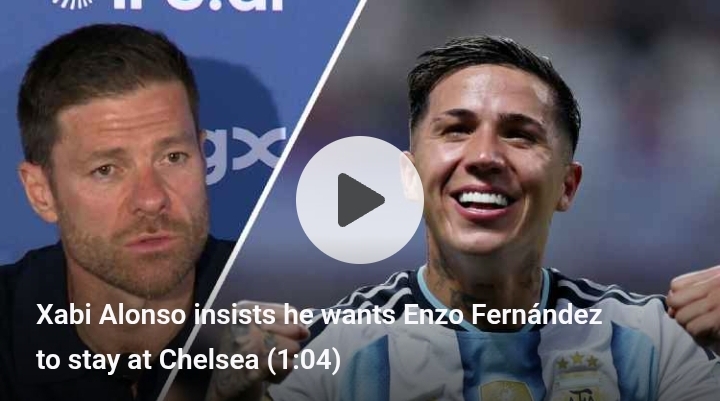
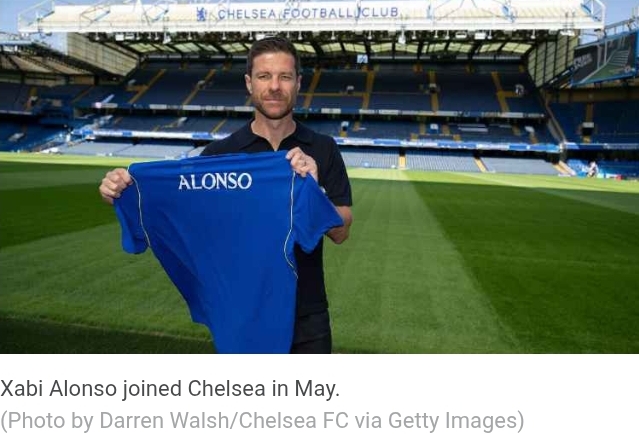
Chelsea manager Xabi Alonso has said that his decision to join Chelsea over Liverpool was “about timings.”
The Spaniard, who spent five seasons as a Liverpool player between 2004 and 2009, was appointed as Chelsea boss in May and took charge of his first training session at the club last week.
In an interview with BBC Sport, Alonso was asked why he joined Chelsea over Liverpool, who sacked head coach Arne Slot two weeks after Alonso arrived in west London.
“Well, it is about timings,” Alonso said. “I am here today on my first day at Stamford Bridge, talking to you.
“I am looking forward to this challenge, a big challenge, and Chelsea is one of the biggest clubs and I am looking forward to having success here.”
Alonso was linked with the Liverpool role in 2024, as Jürgen Klopp was due to leave, and again this year as the clamour for Slot’s departure intensified.
Many also pointed out that he had got excellent performances out of Liverpool duo Florian Wirtz and Jeremie Frimpong while they played under him at Bayer Leverkusen.
But Alonso was appointed at Chelsea instead, and given the title of manager rather than the head coach role his predecessors had held.
Asked about whether that title gave him more authority, Alonso told BBC Sport: “What I like is that we work together and we are all part of the decisions we take, we all feel responsible for that.
“The ultimate goal is clear and, for me, it is the way it should be.
“We are confident that we are doing the right things in the right way. The potential is there. I think there is a strong base and a good team already there.
“We need to reinforce it in the right way and take good decisions to do that. The feeling is that we are aligned with the sporting directors. The ultimate goal is to have a good team, build the right squad and we are in that moment.”
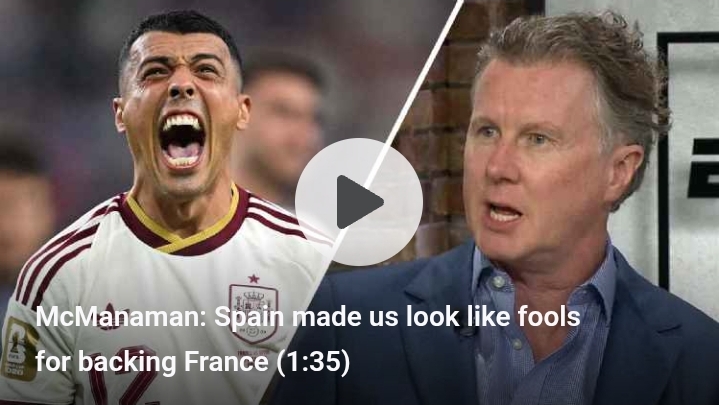
ARLINGTON, Texas — Spain booked their place in Sunday’s World Cup final after dismantling France 2-0.
In a semifinal billed as a 50-50 between two European heavyweights, Spain dominated for the majority of the game and more than deserved their victory.
Forward Mikel Oyarzabal put manager Luis de la Fuente’s Spain team ahead in the 20th minute from the penalty spot after France left back Lucas Digne was penalized for inadvertently kicking Lamine Yamal in the box. It was one of a number of mistakes that littered a dismal first-half performance from France.
Didier Deschamps, who will step down as the French coach after the tournament, was dealt another blow 10 minutes later when Arsenal center back William Saliba was forced off with a back injury.
France, winners in 2018 and runners-up in 2022, were briefly better after the break, but any momentum was killed by Spain’s second goal.
Spain right back Pedro Porro played a delightful one-two with midfielder Dani Olmo before he calmly slotted his finish past goalkeeper Mike Maignan.
For all of France’s attacking talent, they ended the game with an expected goals (xG) total of just 0.3 as Spain, the reigning European champions, reached their second World Cup final and first since lifting the trophy in 2010.
England or Argentina, who play in the second semifinal in Atlanta on Wednesday, await. — Rob Dawson
Tournament favorites France collapse
In games like tonight’s, you’re reminded that it’s a team sport. Get your approach right, and the whole becomes greater than the sum of its parts. Spain played to their strengths — technical ability up and down the side — or, more aptly, used them to nullify France’s strengths. On Bastille Day, it was Les Bleus who were overrun.
The tournament favorites crashing out will make headlines, and rightly so, but it’s worth noting that Spain matched up exceptionally well with manager Didier Deschamps’ France crew. Their ability to keep the ball for long stretches and go on the hunt to win it back the minute they lost it blunted France’s buildup play.
Central midfielders Adrien Rabiot and Aurélien Tchouaméni were outmanned and outfought by Spain’s midfield. Neither will be mistaken for Andres Iniesta any time soon in terms of playmaking, but they also got little help from a back four composed of defenders who are just that: defenders who aren’t known for their ability on the ball or their knack for joining in the attack. (The situation got worse in that sense when Saliba had to be replaced by Maxence Lacroix.)
It’s the sort of French kryptonite which few teams, other than Spain, can employ for the simple reason that most sides at this World Cup aren’t able to keep the ball this well or press this well. That press was critical because it robbed France of the ball over the top for the speedsters — Bradley Barcola, Ousmane Dembélé and, of course, Kylian Mbappé — up front.
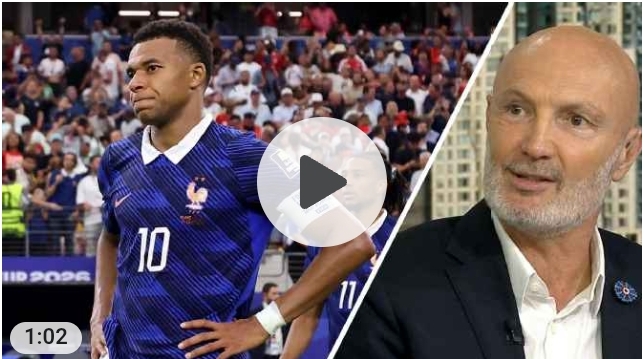
Leboeuf: France semifinal loss to Spain is ‘a failure’
Deschamps tried to counter by dropping Michael Olise deeper, but the Bayern Munich star had a rough day, caged between Rodri and Fabián Ruiz. At halftime, he opted for Manu Koné, giving up on Rabiot’s physicality for a little more passing nous. Again, no luck.
He sat and waited for a Spain mistake that never came, gambling on keeping Mbappé and Dembélé high even in defensive situations, knowing that a long clearance could leave them in a 2-on-2. The problem with doing that is you invite pressure and potentially another goal. That’s exactly what happened on Porro’s goal.
It’s not the best way for Deschamps to end his World Cup-winning stint as France manager, and he will take his share of criticisms, especially when juxtaposed with a coach like De la Fuente, who simply does far more sophisticated things on the pitch.
On the other hand, how much can we really blame him?
He focuses on preparing his team mentally, keeping it simply tactically and waiting for his front four to do something special (and usually they do). It worked a treat for much of the tournament and, in principle, when you have some of the greatest attacking talents in the world, it makes sense not to overly burden them and let them find a way. Until you run into an opponent who denies you the ball, denies you space and outhustles you at every turn.