The AGF, Mr Fagbemi, noted that a major turning point came in 2011, when the parties reached an agreement under which Malabu relinquished its interest in the block in exchange for compensation.
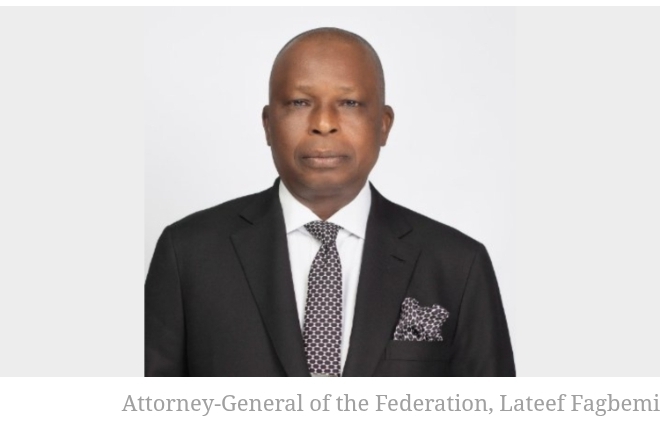
The Attorney-General of the Federation, Lateef Fagbemi, has defended the federal government’s handling of the OPL 245 dispute, dismissing criticisms of the deal as misrepresentations of a decades-long legal and commercial process.
He said the agreement could unlock up to 150,000 barrels per day (bpd) from one of Nigeria’s most strategic deep water oil assets.
Mr Fagbemi, a Senior Advocate of Nigeria (SAN), rejected comments attributed to the Atiku Abubakar Media Office, describing them as misleading accounts of a process spanning years of negotiations, litigation, and international arbitration.
“It is important to note that OPL 245… has long been regarded as one of the country’s most commercially promising hydrocarbon assets. However, it remained largely undeveloped due to persistent disputes. The decisive action taken by the current administration is aimed at resolving these issues, limiting financial exposure, and creating the conditions for the asset to be fully developed and brought into production.
“The significance of this development cannot be overstated. The project is designed around a large-scale floating production system and includes substantial gas export components linked to Nigeria LNG. For years, OPL 245 symbolised unrealised national potential. The present outcome… transforms it into a viable and bankable opportunity capable of delivering economic and social benefits, including increased government revenue, enhanced energy security, and improved investor sentiment,’’ Mr Fagbemi said.
How the dispute started
Mr Fagbemi traced the origin of the controversy to 1998, when Oil Prospecting Licence (OPL) 245 was first awarded to Malabu Oil and Gas Limited, before being revoked in 2001 and reassigned to Shell-linked interests in 2002 during the administration of President Olusegun Obasanjo.
He said the competing claims triggered years of litigation, regulatory reviews, and political interventions, eventually leading to a series of settlements involving the Federal Government, Malabu, Shell-related entities, and Eni-linked companies.
The statement noted that a major turning point came in 2011, when the parties reached an agreement under which Malabu relinquished its interest in the block in exchange for compensation, while Shell and Eni were granted rights to jointly operate the asset, with a plan to convert it into an Oil Mining Lease.
Mr Fagbemi said the transaction had been reviewed in multiple jurisdictions, including the United States, the United Kingdom, and Italy, without any final judicial finding of wrongdoing against the companies or the structure of the deal.
He added that Eni entities and Nigerian Agip Exploration Limited later initiated arbitration proceedings against Nigeria at the International Centre for Settlement of Investment Disputes (ICSID), arguing that delays in converting the licence breached obligations under the Nigeria–Netherlands Bilateral Investment Treaty.
According to him, the country faced potential liability exceeding $2 billion in damages and associated costs.
Court ruling strengthens government position
In May 2025, the Court of Appeal in Abuja dismissed the suit filed by Malabu Oil and Gas Ltd against Agip Oil Company over the disputed $1.3 billion oil block.
The three-member panel, led by H. A. Barka, set aside a 2020 Federal High Court ruling and held that Malabu’s claims amounted to an abuse of court process.
Mr Fagbemi said the offshore asset had remained largely untapped due to prolonged disputes, depriving the country of significant revenue.
He noted that the current arrangement is designed to unlock development, reduce litigation risks, and improve Nigeria’s investment climate in the deepwater sector.
Eni defends role in transaction
Italian energy giant Eni reiterated that all payments connected to the 2011 OPL 245 resolution were made directly to the Federal Government of Nigeria, not private intermediaries.
The company said the transaction was executed under a formal agreement with the Nigerian state and had been reviewed by several investigative and judicial authorities, including Italian financial police reports and external legal audits.
Eni maintained that Malabu Oil and Gas remained the recognised licence holder until the 2011 settlement and that its compensation was part of a government-brokered resolution to end competing claims.
Tinubu administration moves to finalise restructuring
President Bola Tinubu and Eni Chief Executive Claudio Descalzi have agreed on a fresh plan aimed at resolving outstanding issues and terminating ongoing arbitration proceedings.
Following a meeting in Abuja on 5 March, both parties agreed to restructure the asset into two Petroleum Mining Leases and two Petroleum Prospecting Leases, to be jointly operated by Nigerian Agip Exploration, Shell, and the Nigerian National Petroleum Company Limited.
The development areas, centred on the Zabazaba and Etan fields, are estimated to hold about 500 million barrels of oil, with planned output aligned with earlier projections and gas exports of up to 200 million standard cubic feet per day to Nigeria LNG.
Under the arrangement, pending claims linked to the block are expected to be settled, while arbitration cases at ICSID will be discontinued once final terms are concluded.
Mr Tinubu described the agreement as a strategic milestone, saying it reflects the administration’s commitment to resolving legacy disputes and strengthening the investment environment.
“This outcome sends a clear signal to global investors that Nigeria is prepared to address legacy issues transparently, uphold the rule of law, and create a stable environment for long-term capital,” he said.
Olu Arowolo-Verheijen, Special Adviser to the President on Energy, said the revised terms improve on the 2011 agreement and align with the Petroleum Industry Act (PIA) and broader fiscal reforms.
“The updated structure provides investors with clarity while ensuring stronger value and safeguards for the Federation,” she said.
Reuters had earlier reported that Nigeria split the asset into four parts to be operated by Eni and Shell as part of efforts to bring it into production.
Criminal trials and acquittals
The deal attracted international scrutiny after Italian prosecutors alleged that a significant portion of the $1.3 billion purchase price was diverted to politicians and middlemen.
It was reported that about half of the funds were traced to accounts linked to businessman Abubakar Aliyu, believed to have acted on behalf of senior officials, including former Attorney-General Mohammed Adoke.
Shell and Eni, along with several executives, including Mr Descalzi, were tried in Italy but acquitted in 2021 after denying wrongdoing.
In Nigeria, Mr Adoke was also charged by the Economic and Financial Crimes Commission (EFCC) over the transaction and his role in the 2011 federal government attempted resolution of the disputes but was later discharged by the court due to lack evidence of wrongdoing against him.
He was similarly cleared in a separate case involving alleged money laundering.
In a book published last year, Mr Adoke described the litigation as wasteful and maintained that the 2011 agreement saved Nigeria from greater financial exposure.