1st March, 2026
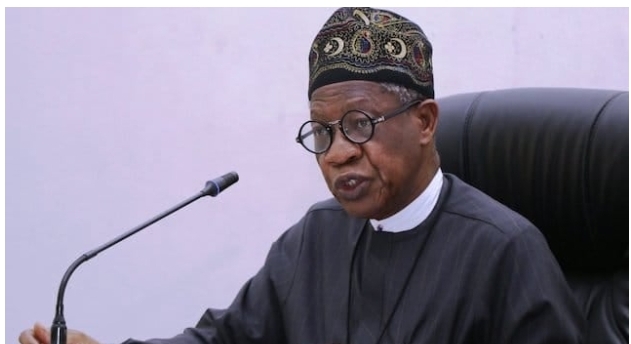
Lai Mohammed, former minister of information and culture, has described communication as the most strategic tool of governance.
Mohammed spoke in Lagos on Thursday at the reading and signing of his book, Headlines & Soundbites: Media Moments That Defined an Administration.
“Governance is not only about making and implementing decisions. It is about explaining the decisions and convincing the people about their implementation,” he said.
The former minister said during his nearly eight-year tenure, he leveraged communication to project the achievements of the All Progressives Congress (APC)-led federal government under the late former President Muhammadu Buhari, while also obtaining feedback from the public.
He listed town hall meetings, media tours of government projects, interactions with foreign media and global think tanks, the scorecard series, strategic stakeholder engagements, the testimony series, and regular briefings as strategies he deployed.
Mohammed said the scorecard series was launched to counter the narrative ahead of the 2023 general election that the APC government had nothing to campaign on.
“In total, 26 ministers made presentations over a 17-week period,” he said.
He added that the series concluded 11 days before the 2023 presidential election and provided campaign materials for party candidates.
The former minister said the strategic power of communication informed the title of his book and decision to spotlight media moments that defined the administration.
On the role of the media, Mohammed said the government must regard it as a partner rather than an adversary.
“The media, in playing its constitutionally assigned role as watchdog, may be adversarial, but it is never the opposition; it is the amplifier,” he said.
“While government may sometimes see the media as a difficult partner, it remains the most powerful partner it will ever have.”
Asked about his most difficult decision in office, Mohammed cited the suspension of Twitter, now known as X.
“I was concerned that suspending Twitter would adversely affect Nigerians who use the platform to advertise their goods and services,” he said.
“I was also concerned about the optics regarding the government’s commitment to freedom of expression and the opening up of the democratic space.
“However, none of those considerations outweighed the threat to national security posed by the irresponsible use of the platform.
“In governance, public interest must always take precedence over individual interest.”
He described the #EndSARS protest as his most difficult moment in office.
“It confirmed my worst fears about fake news and disinformation as a clear and present danger to our country,” he said.
Mohammed said the widespread belief that there was a massacre at the Lekki Toll Gate was fuelled by fake news and disinformation, particularly on Twitter and by CNN.
“The government never said nobody died during #EndSARS. Of course, many people died across the country,” he said.
“But we have been consistent in stating that there was no massacre at the Lekki Toll Gate. Five years on, no one has come forward to say their children or wards left for the Lekki Toll Gate protest and never returned.”
The former minister said he wrote the book to document his experience in office and urged other public officials to do the same.
“I am a strong advocate of Africans telling their own stories from their own perspectives in order to avoid distortion,” he said.
“Having had the rare privilege of serving at the highest level of government, I believe I owe it to myself, my country, and posterity to give an account of my stewardship.”