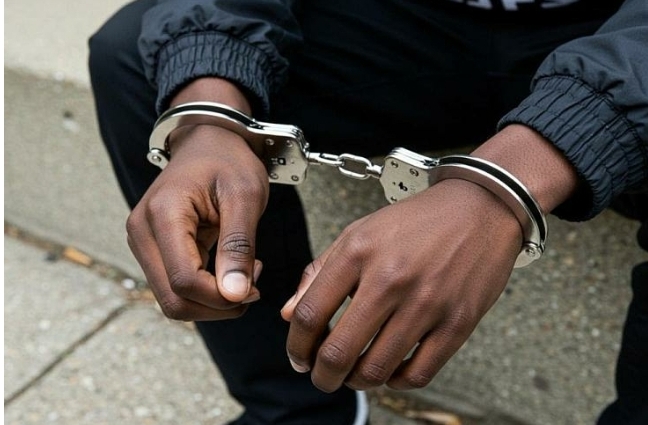
The 10 year jail term for Babagana Habeeb by a federal High Court sitting in Abuja who was charged for selling petrol to Boko Haram terrorists do not inspire confidence that justice would be served to those aiding and abetting terrorism in any way.
Justice Peter Lifu found the convict guilty of aiding terrorism by supplying fuel, a vital resource in the terrorists’ logistical plans. He ordered that the jail term run from the date of the convict’s arrest. For someone who has spent 10 years in detention, Habeeb may well be on his way home soon.
Habeeb, a fuel dealer based in Maiduguri, was brought before the court by the federal government and admitted to supplying petroleum products to insurgents operating in the north-east.
Although he is not a terrorist, Habeeb is guilty of aiding and abetting terrorism. In our opinion, the offence of aiding and abetting is as serious as actually committing the crime. There is no gaslighting. Those who aid terrorists are worse than the terrorists themselves because they provide vital support for terrorism to thrive.
Since 2009, when Boko Haram terrorists gained national attention through the murder of police officers and protests in Maiduguri, they have killed thousands of innocent citizens, displaced countless communities, abducted many, and raped scores of women and girls.
Officers and men of the nation’s military, who are the real heroes in the fight to defeat these terrorists, have continued, like the citizens, to bear the brunt of their actions. Scores of the nation’s brave officers recently faced an attack in Beneisheik, where soldiers, including a Brigadier-General, were killed. Terrorists’ atrocities against Nigeria are on an unprecedented scale.
We recall that in January, Troops of Operation Hadin Kai uncovered an underground Boko Haram logistics storage facility filled with medical supplies, fuel, and other essential materials after overrunning several terrorist enclaves in the Timbuktu Triangle area of Borno State.
The military stated that its Operation Desert Sanity resulted in the destruction of several terrorist camps and significantly weakened the logistical and operational capabilities of Boko Haram and ISWAP factions operating in the region.
It listed other items recovered to include “several Boko Haram/ISWAP flags, links of 12.7 × 108 mm ammunition, diesel-powered grinding machines, large quantities of medical supplies, several bags of grains, a pick-up truck, underground logistics storage, and petroleum and oil lubricant dumps, all of which further degraded the operational and logistical capabilities of the terrorists.”
There is no denying that recoveries like these significantly weaken the operational and logistical capacity of the terrorists.
However, these discoveries, like the seemingly intractable war, remind the nation of one thing: there are individuals supporting and assisting the terrorists. It is clear that these terrorist elements have the backing of some financiers who regularly fund their activities, informants who provide them with information about troop movements and strategies, and persons like Habeeb, who assist with their logistics.
One thing unites these groups of individuals: they are the true terrorists. And any genuine effort to eliminate this seemingly intractable menace must include harsh punishment for this category of persons.
We have repeatedly stated that those whose actions, regardless of how distant, contribute to supporting terrorists and other criminals who have continued to spill innocent blood in various parts of the country are the real offenders. They must face justice in the strongest possible manner when caught.
Justice Lifu had the chance to demonstrate this in the ruling he issued on Habeeb. However, in our opinion, he did not make full use of it. There is no reason why individuals whose actions support these atrocities should be exempt in any way. Giving them a lenient judgment, as Justice Lifu did, equates to sparing them.
The law did not establish the court’s discretion for entertainment. Can Justice Lifu honestly claim he exercised his discretion prudently, considering the atrocities committed by Boko Haram?
When justice is not administered in a way that deters others or fails to comfort crime victims, we create conditions for more crimes. The verdict on Habeeb appears more like a pat on the back. He is likely to, upon his return to Maiduguri, continue selling petrol to the terrorists. The federal government must appeal this verdict. Habeeb deserves a more severe punishment, even if only to deter others.